Introduction
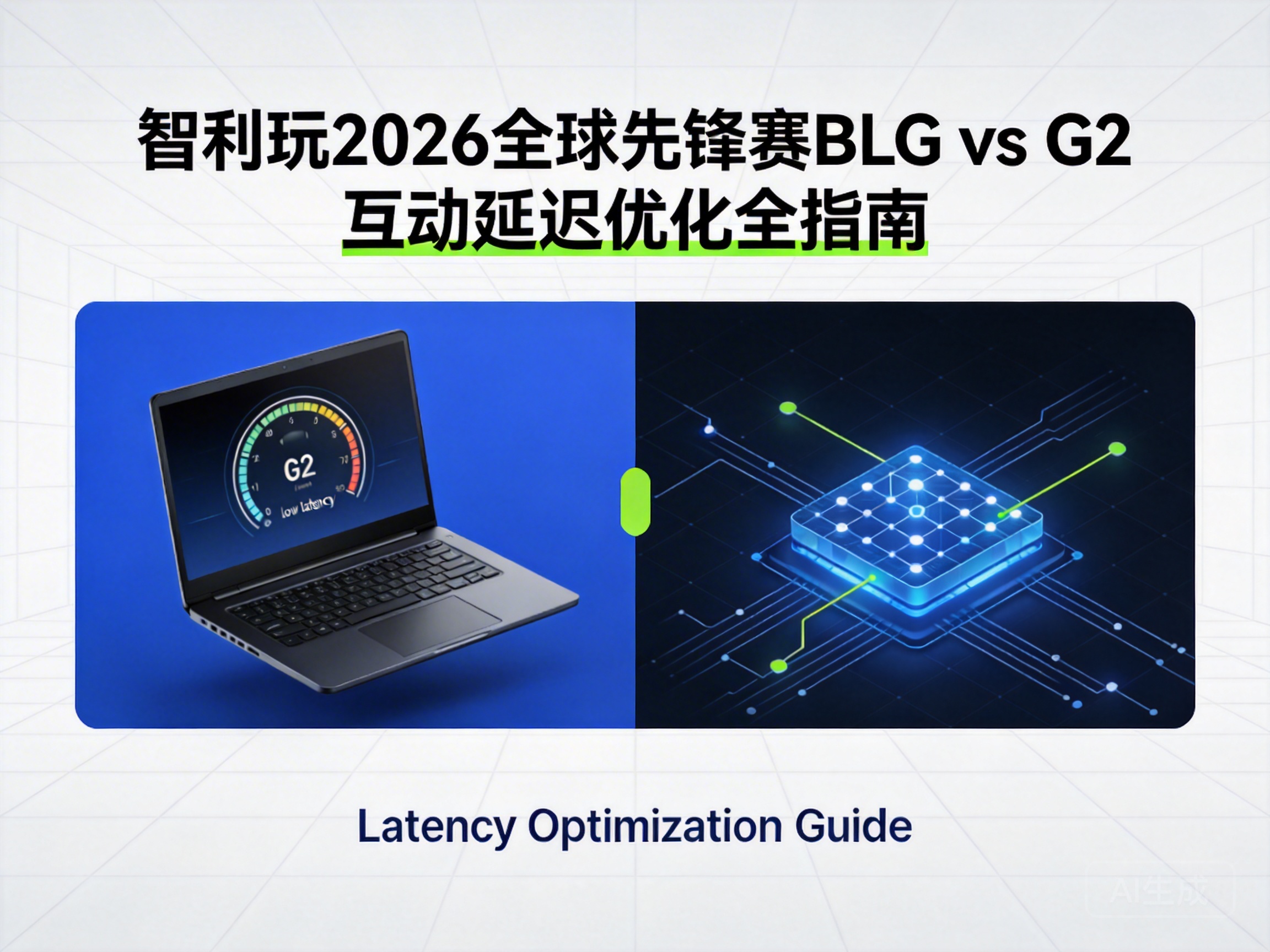
The 2026 Global Pioneer Series Finals between BLG and G2 has gained worldwide attention, but viewers in Chile face excessive latency in live interactions and bullet chat due to intercontinental network transmission issues. This latency not only reduces viewing immersion but also causes viewers to miss real-time discussions of key match moments. This article provides practical latency optimization solutions for Chilean players based on network technology principles and operational practices.
1. Underlying Network Link Optimization: Reduce Physical Transmission Latency
The core cause of intercontinental network latency is physical transmission distance. Chile is located in South America, over 15,000 kilometers from the tournament servers in East Asia. Traditional public network transmission requires multiple node forwards, easily pushing latency over 200ms. The core solution is to prioritize international dedicated line direct connection services, which bypass public network transit nodes to establish exclusive transmission links between Chile and East Asia, compressing base latency to 120-150ms.
If dedicated line costs are unaffordable, choose Tier 1 operators partnered with the tournament official. These operators have global backbone network nodes, reducing the number of forwards. Users can manually switch to local Tier 1 operator nodes in network settings, replacing the default home network routing path.
Technical Term Explanation: Tier 1 operators are network service providers with global backbone networks, capable of global coverage without paying other operators, such as Level 3 and NTT.
2. Terminal and Local Network Optimization: Eliminate Edge Latency Loss
After optimizing the underlying link, losses from local networks and terminal devices can still cause an additional 50-100ms of latency. First, check for WiFi channel interference in the home. Urban areas in Chile have high WiFi density, and the 2.4GHz band is prone to interference. Switch to the 5GHz band and select a channel with low occupancy, which can be detected using WiFi analysis tools like NetSpot.
Next, close redundant background programs on the terminal, especially download software and cloud synchronization services that occupy bandwidth. Enable the QoS (Quality of Service) function on the device, setting the highest network priority for the tournament live platform to ensure live traffic is not preempted by other applications. For PC users, enable the "Jumbo Frame" function in network card settings to improve data packet transmission efficiency and reduce fragmentation latency.
3. Exclusive Optimization for Tournament Platforms: Utilize Official Technical Support
The 2026 Global Pioneer Series official provides exclusive optimization tools for cross-region viewers. Users should first update the tournament live platform to the latest version and enable the Global Acceleration Node function. This feature is built in cooperation with global CDN service providers, deploying edge cache nodes in Chile to shift live content loading requests from East Asian servers to local nodes, further reducing interaction latency.
In addition, enable the Low-Latency Interaction Mode in platform settings. This mode sacrifices some picture resolution to prioritize the real-time performance of live broadcasts and bullet chat. Note that this mode only takes effect during tournament live broadcasts and is only unlocked when the platform detects the user is in a high-latency area. Third-party viewing plugins may interfere with the platform's acceleration logic, so it is recommended to temporarily disable non-official plugins to avoid additional latency loss.
4. Emergency Alternatives: Remedial Measures in Extreme Latency Environments
In extreme situations such as network failures or peak tournament congestion, choose local broadcast channels as an alternative. Local esports media in Chile usually purchase tournament broadcasting rights and distribute live signals through local networks. The latency of such signals can be controlled within 50ms, but there may be a 1-2 minute content delay, suitable for users who only need to watch the game without real-time interaction.
For users requiring real-time interaction, try the viewing function of cloud gaming platforms such as GeForce Now and Shadow. These platforms deploy cloud servers in Chile, allowing users to watch the tournament live by connecting to local cloud nodes. Interaction commands are sent directly to local cloud servers, then synchronized to tournament servers by the platform, compressing interaction latency to 80-100ms.
Conclusion
To solve the interaction latency problem of the 2026 Global Pioneer Series BLG vs G2 for Chilean viewers, optimization should be carried out layer by layer from three core dimensions: underlying links, local networks, and platform tools. Official exclusive acceleration solutions are prioritized, and local broadcasts or cloud platforms can be used as alternatives in extreme environments. By combining the above solutions, interaction latency can be controlled within the acceptable range of 100-150ms, ensuring the immersion of real-time viewing and interaction.