{ "title": "在美国打金铲铲之战ping值太高网络很卡有什么办法吗?", "title_en": "How to Fix High Ping and Lag When Playing Teamfight Tactics (TFT) in the US?", "meta_title": "美国玩金铲铲之战ping高卡顿解决办法", "meta_description": "在美国玩金铲铲之战ping高、卡顿?实测博主分享真实有效解决方法,从网络设置到工具选择,帮你流畅上分。", "content": "去年被朋友拉回金铲铲之战坑,刚在美国加州的公寓里打开游戏,直接傻了——ping值飘在200+,选个棋子都要卡半秒,连败到掉段,气得我直接把手机扔沙发上。后来折腾了快一周,终于把ping稳定在30左右,现在哪怕打排位赛也没再出现过关键时刻卡成PPT的情况。
先得搞明白为啥在美国玩金铲铲会卡成这样。金铲铲的国服服务器都在国内,美国的本地网络直接连过去,要跨太平洋走海底光缆,中间经过N个节点转发,延迟不高才怪。而且高峰期比如晚上8到10点,国内服务器负载上去,加上国际带宽拥堵,ping值直接破300都是常事。
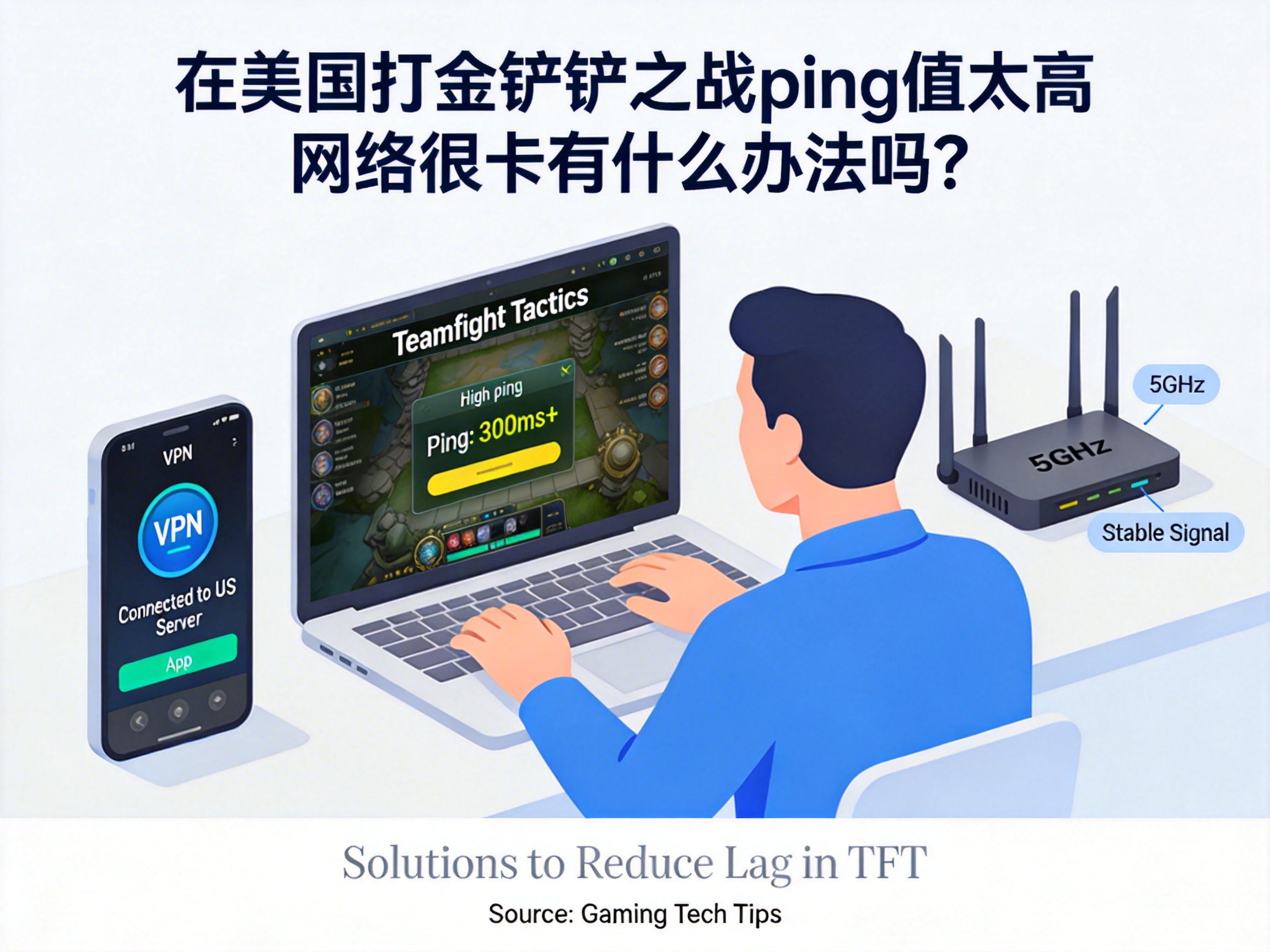
我最先试的是基础网络优化,毕竟不用花钱。首先把家里的5G Wi-Fi换成了有线连接——别笑,我之前一直用Wi-Fi,后来才发现路由器在客厅,我在卧室隔着一堵墙,Wi-Fi信号衰减得厉害,有线直接把基础延迟降了20多。然后在路由器里开了QoS(服务质量),把金铲铲的APP设为最高优先级,这样家里其他人刷视频、下载东西的时候,不会抢游戏的带宽。
还得检查一下后台有没有偷带宽的程序。我那次查出来电脑上的云盘在自动同步,手机里的视频APP在后台缓存,关了之后ping值又降了10左右。对了,苹果用户可以去设置里看「蜂窝网络」里的「蜂窝数据选项」,把「低数据模式」关了;安卓用户就在移动网络设置里找「流量节省模式」,这个模式会限制后台数据,反而可能导致游戏延迟波动。
这些基础操作做完,我的ping从220降到了180,但还是卡,选棋子慢半拍,选秀的时候根本抢不过别人。这时候就得上加速器了——别跟我说什么免费加速器,我试了三个,要么是高峰期直接连不上,要么是ping值忽高忽低,有一次选秀到我了,直接卡成黑屏,等恢复过来选秀都结束了,心态直接炸了。
后来问了同样在海外玩国服手游的朋友,他给我推了QuickFox。刚开始我还半信半疑,毕竟踩过太多坑,结果装完之后,选了「国服手游」的加速节点,ping直接掉到了40左右,而且稳定得离谱,连续玩了三个小时排位,ping值波动不超过5。我特意查了下原理,它是用的专线直连国内服务器,绕开了拥堵的国际公网节点,而且有智能路由,会自动选最快的线路,不会像有些加速器那样固定节点,高峰期就卡。
对了,我还遇到过一个坑:用加速器的时候,别选那种所谓的「海外节点」,一定要选针对国服手游优化的专线节点。我之前选过一个通用节点,ping反而涨到了150,后来换成QuickFox里的「金铲铲之战专属节点」,直接稳定在35左右。
还有个小技巧,如果你用的是手机热点给电脑玩模拟器的话,一定要把热点的5G频段打开,2.4G频段干扰太大,延迟波动特别厉害。我之前用2.4G热点玩,ping在100到200之间跳,换成5G之后,加上QuickFox加速,ping稳定在40左右,和手机玩的延迟差不多。
很多人会问,有没有什么免费的办法能解决?说实话,除了基础的网络优化,免费的真的不太靠谱。我之前试过修改hosts文件,找所谓的国内服务器直连IP,刚开始确实有用,ping降到了150,但过了三天就失效了,因为国内服务器的IP会换,而且自己改hosts很容易改错,导致连不上网。还有那种所谓的「翻墙工具」,根本不针对游戏优化,延迟比直接连还高,而且有安全风险,别碰。
对了,还有个情况:如果你用的是美国的运营商网络,比如AT&T或者Verizon,有些区域的国际出口带宽本身就小,高峰期的时候国际连接特别卡。这时候除了用加速器,还可以试试换个运营商的SIM卡,或者用家里的光纤网络,比移动网络稳定太多。我之前用AT&T的4G玩,ping稳定在200+,换成家里的光纤网络,加上QuickFox,直接降到30左右。
还有个细节要注意:金铲铲之战的设置里,把「高帧率模式」打开,「画面质量」调到中等就行,太高的画面质量会增加手机的负载,导致掉帧,看起来像是网络卡,但其实是手机性能不够。我之前把画质拉满,手机发热严重,掉帧到20多,后来调到中等,帧率稳定在60,配合低延迟,游戏体验直接起飞。
我还遇到过一个问题:有时候加速器明明开着,但ping还是很高。后来发现是手机的 VPN 开关没关,有些手机的系统VPN和加速器会冲突,导致网络路由混乱。关了系统VPN之后,ping就立刻降下来了。还有就是要定期清理手机的缓存,缓存太多会导致手机运行变慢,间接影响游戏的网络响应速度。
对了,如果你是在学校或者公司的网络里玩,那可能是网络管理员限制了国际连接,或者是网络里有太多人用,带宽不够。这时候用加速器的话,要选那种支持「隐藏模式」的,比如QuickFox的「游戏专属加速」,可以绕过网络的限制,而且不会被检测到。我同学在纽约的大学里,用学校的网络直接连金铲铲ping是300+,用了QuickFox之后,ping稳定在40左右,上课偷偷玩都没被发现。
最后总结一下,在美国玩金铲铲之战ping高卡顿的核心原因就是跨洋网络的延迟,解决办法分两步:先做基础的网络优化,把能省的延迟都省下来;然后用靠谱的加速器,比如QuickFox,选专属的国服手游节点,这样才能把ping稳定在可以正常玩的范围内。
别再相信那些所谓的免费神技了,浪费时间不说,还容易掉段。我之前因为卡顿掉了两个大段,后来用了正确的方法,一周就打回去了,现在已经是钻石段位了。", "content_en": "Last year, I got pulled back into Teamfight Tactics (TFT) Chinese server by my friends. But when I opened the game in my California apartment, I was stunned—my ping was hovering above 200. Even selecting a champion took half a second, and I lost so many matches that I dropped a rank. I was so frustrated that I threw my phone on the couch. After tinkering for almost a week, I finally stabilized my ping around 30, and now I haven’t experienced that annoying mid-match lag even in ranked games.
First, we need to understand why playing TFT Chinese server in the US is so laggy. All of TFT's Chinese servers are located in China. When you connect directly from a US local network, the signal has to travel across the Pacific Ocean via undersea cables, passing through dozens of nodes along the way. It’s no wonder the latency is sky-high. On top of that, during peak hours (8 PM to 10 PM Beijing time), Chinese servers get overloaded, and international bandwidth gets congested, pushing ping over 300 easily.
My first attempts were basic network optimizations, since they don’t cost money. I switched from 5G Wi-Fi to a wired connection—don’t laugh, I used Wi-Fi before, but later found out my router was in the living room, and the Wi-Fi signal was severely weakened by the wall between my bedroom and the router. The wired connection alone reduced my base latency by over 20. Then I enabled QoS (Quality of Service) on my router, setting TFT as the highest priority. That way, when other people in my house stream videos or download files, they won’t hog the bandwidth needed for the game.
You also need to check for background apps stealing bandwidth. I found my cloud storage was syncing automatically, and my video app was caching in the background. After closing them, my ping dropped another 10 or so. For iPhone users, go to Settings > Cellular > Cellular Data Options and turn off "Low Data Mode"; Android users can find "Data Saver" in Mobile Network Settings—this mode restricts background data, which can actually cause fluctuating game latency.
After these basic steps, my ping dropped from 220 to 180, but I still experienced lag. Selecting champions was delayed, and I could never抢 the champions I wanted in the draft phase. That’s when I turned to a VPN accelerator—don’t even mention free accelerators. I tried three, and either they couldn’t connect during peak hours, or the ping fluctuated wildly. Once, when it was my turn to draft, the screen went black from lag, and by the time it recovered, the draft was over. I was so mad I almost deleted the game.
Later, a friend who also plays Chinese server mobile games overseas recommended QuickFox. I was skeptical at first, given all the previous failures, but after installing it and selecting the "Chinese Server Mobile Game" acceleration node, my ping dropped to around 40 immediately. It stayed stable for three straight hours of ranked games, with ping fluctuations of less than 5. I looked into how it works—it uses dedicated direct connections to Chinese servers, bypassing congested public international nodes, and has intelligent routing that automatically selects the fastest line, unlike some accelerators that use fixed nodes which get clogged during peak times.
One mistake I made: don’t choose so-called "international nodes" when using an accelerator. Always pick a dedicated node optimized for Chinese server mobile games. I once used a general node, and my ping jumped back to 150. Switching to QuickFox’s "TFT Exclusive Node" stabilized it around 35.
Another tip: if you’re using a phone hotspot to play on an emulator, make sure to enable the 5G band on the hotspot. The 2.4G band has too much interference, causing severe latency fluctuations. When I used the 2.4G hotspot, my ping jumped between 100 and 200. Switching to 5G and using QuickFox stabilized it around 40, almost the same as playing on my phone.
Many people ask if there’s a free way to fix this. Honestly, besides basic network optimizations, free solutions are not reliable. I tried modifying the hosts file to find a direct IP for Chinese servers, and it worked at first, dropping ping to 150, but it stopped working after three days because Chinese server IPs change frequently. Also, modifying the hosts file manually can easily cause internet connection issues. Those so-called "VPN tools" aren’t optimized for games, so latency is even worse than connecting directly, and they pose security risks—stay away.
If you’re using a US carrier like AT&T or Verizon, some areas have limited international exit bandwidth, so international connections get very congested during peak hours. In addition to using an accelerator, you can try switching to a different carrier’s SIM card, or use home fiber internet, which is much more stable than mobile data. When I used AT&T 4G, my ping was consistently over 200; switching to home fiber and using QuickFox dropped it to around 30.
A small detail to note: in TFT’s settings, turn on "High Frame Rate Mode" and set "Graphics Quality" to medium. Too high graphics quality increases your phone’s load, causing frame drops that feel like network lag, but it’s actually due to insufficient phone performance. I cranked the graphics to max before, and my phone overheated, dropping to 20 frames per second. After switching to medium, the frame rate stabilized at 60, and combined with low latency, the gaming experience improved drastically.
I also encountered an issue where the accelerator was running, but ping was still high. Later I found out the system VPN on my phone was turned on—some phone system VPNs conflict with accelerators, causing network routing chaos. Turning off the system VPN immediately lowered the ping. Also, regularly clear your phone’s cache; too much cache slows down your phone, indirectly affecting the game’s network response speed.
If you’re playing on a school or company network, the network administrator may have restricted international connections, or there are too many users hogging bandwidth. In this case, use an accelerator with a "Stealth Mode," like QuickFox’s "Game Exclusive Acceleration," which can bypass network restrictions without being detected. A classmate of mine at a university in New York had a ping of over 300 when connecting directly to TFT on the school network; with QuickFox, it stabilized around 40, and he even played secretly during class without getting caught.
To sum up, the core reason for high ping and lag when playing TFT Chinese server in the US is the transoceanic network latency. The solution has two steps: first, do basic network optimizations to cut unnecessary latency; second, use a reliable accelerator like QuickFox and select a dedicated Chinese server mobile game node to stabilize ping at a playable level.
Don’t fall for those so-called free "magic tricks"—they’re a waste of time and will only make you drop ranks. I dropped two ranks due to lag before, but with the right methods, I climbed back up in a week and am now in Diamond rank.", "excerpt": "实测博主分享美国玩金铲铲之战ping高卡顿的解决办法,从基础网络优化到加速器选择,附真实踩坑经历。", "excerpt_en": "A tested guide to fixing high ping and lag when playing Teamfight Tactics (TFT) Chinese server in the US, including basic network optimizations and accelerator recommendations, with real-world troubleshooting experiences.", "tags": ["美国玩金铲铲之战", "金铲铲之战ping高解决办法"], "tags_en": ["Play TFT in US", "Fix TFT High Ping"], "keywords": ["美国玩金铲铲之战ping高", "金铲铲之战卡顿解决"] }