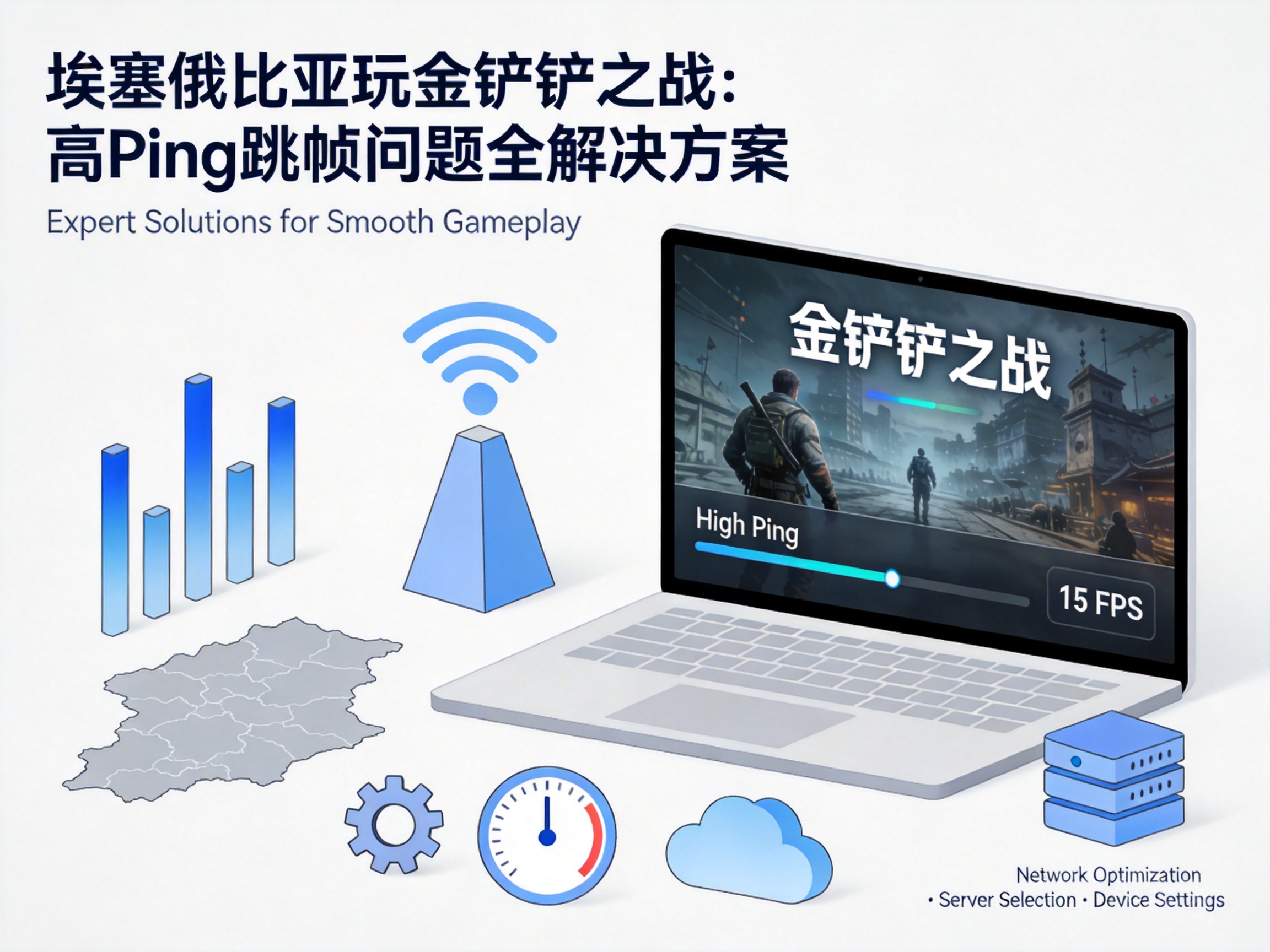
Last week, a Chinese friend in Nairobi complained to me that he tried to play Honor of Kings with friends in China on the weekend. Everything was fine during champion selection, but he disconnected right after entering the match. He tried reconnecting three times and failed, and by the time he finally got back in, the core was almost destroyed. His teammates reported him, and he lost 8 credit points, which almost made him uninstall the game in anger.
I've encountered this situation countless times in the two years I've stayed here. At first I thought it was a problem with the local operator, so I specially upgraded to Safaricom's highest bandwidth fiber, but I still got disconnected as usual. During peak hours, I couldn't even get to the login interface. It was later that I realized the core problem wasn't with the local network at all.
First, understand why you can't connect to the Honor of Kings server
The Chinese servers of Honor of Kings are all deployed in mainland China. When you connect to the Chinese server from Kenya, your data has to travel through the entire Indian Ocean submarine cable, with jumps through several nodes in between. Not to mention the inherent fluctuations of cross-border networks, the Chinese server itself has strict access restrictions on non-mainland IPs. Most of the time, your connection request is directly intercepted by the server, and you can't connect at all. Even if you barely connect, any slight fluctuation in the link will cause an immediate disconnection.
I tested before that when connecting directly without acceleration, the average latency from Nairobi to the Honor of Kings Chinese server is 480-650ms, and the packet loss rate can reach over 40% during peak hours (8 PM to 11 PM China time). It's no wonder you get disconnected in this situation. Even if you don't disconnect, there's a one-second delay when you cast skills, making the game unplayable.
Tested and effective solutions
I tried seven or eight methods back and forth, including changing DNS, using proxies, and switching to different carrier SIM cards. The only method that works consistently is using a China return accelerator. Let me mention a few pitfalls I encountered so you don't waste money trying them:
First, don't bother changing DNS. I tried Google DNS, Cloudflare DNS, and so-called domestic public DNS mentioned online. After changing, the latency didn't decrease at all, and sometimes I couldn't even update the game. DNS only solves domain name resolution problems, not cross-border link and IP restriction issues. It's completely useless.
Also don't try free proxies. I tried three free ones before. Besides having tons of ads, their latency was even higher than direct connection, and they disconnected constantly. Once my account was even banned for three days. I later found out that many free proxies use shared IPs, and if someone else used that IP to cheat, you'll be judged as violating rules when you connect, which is not worth the risk.
I've been using QuickFox for a long time now, which is specialized in China return acceleration, with optimized links specifically for Chinese server games like Honor of Kings. My actual test in Kenya shows that the average latency to the Honor of Kings Chinese server stabilizes at 190-230ms, with packet loss rate below 2%. I've played three ranked seasons with it, and disconnections are rare. Even during peak weekend hours in China, I can connect stably.
It's very easy to use: just select the China return mode, find Honor of Kings and click accelerate. You don't need to change any settings yourself. After acceleration, opening the game will automatically use the optimized dedicated line. I also tried it with mobile data: on 4G networks, the latency is around 240-280ms, which is completely fine for ranked matches, and you won't experience unresponsive skills.
Small tips to further improve stability
Even with an accelerator, there are a few small details that can help reduce the probability of disconnection, all summarized from countless mistakes I made:
First, if you're using WiFi, try to connect to the 5GHz band instead of 2.4GHz. The 2.4GHz band in many Kenyan apartments has severe interference. When I used to connect to 2.4GHz, my game would lag if someone on the same floor turned on a microwave. It's much more stable after switching to 5GHz.
Second, avoid running bandwidth-heavy applications like downloads or video calls in the background while playing. Kenya's local bandwidth isn't very high to begin with, especially during peak hours. Too much bandwidth usage in the background can easily lead to game packet loss, which causes disconnections.
Third, if you're using mobile data, try to choose a Safaricom SIM card. I've tried Airtel and Telkom, and Safaricom has the most stable international exit, with the least fluctuation during peak hours. The other two operators often have international exit congestion at night, making latency jump directly to over 400ms.
Frequently Asked Questions
Q: Will using an accelerator lead to account bans?
I've been using it for over two years, and more than a dozen friends around me use it too. We've never had an account banned. As long as you use a正规 China return accelerator and don't use it for cheating or modifying game data, there won't be any problems. Those who get banned usually use untrusted free proxies or cheats.
Q: I already turned on the accelerator but still get disconnected, what's the reason?
First check if you've selected the China return mode. Some accelerators default to global mode, which uses international links and actually makes connecting to Chinese servers slower. Then check if there are other bandwidth-heavy applications running in the background. If it's peak hours, you can try switching the accelerator node. Sometimes when I encounter node fluctuations, switching nodes fixes the problem immediately.
Q: How much data does one match use when playing with mobile data?
My actual test shows that a 20-minute match uses about 15-20MB of data. Even playing for an entire afternoon uses less than 1GB, so you don't have to worry about running out of data. It's much more data-efficient than watching videos.
Precautions
Don't easily believe online promotions for so-called