Introduction
The 2026 FIFA World Cup Intercontinental Playoff match between New Caledonia and Jamaica, featuring teams from Oceania and CONCACAF, has drawn wide attention. Many Chinese fans in Australia opt for Chinese commentary live streams but frequently encounter lag issues. Such disruptions not only ruin the viewing experience but also risk missing key moments like goals. This article provides professional, practical solutions based on Australia's network environment and live broadcast characteristics.
1. Troubleshoot Local Network Hardware and Connections First
Local network hardware failures are common causes of live stream lag and should be prioritized for troubleshooting. First, check the status of your router and optical modem. If indicator lights are abnormal or devices overheat, try power-cycling them: turn off power, wait 3-5 minutes, then restart. This effectively clears device caches and restores network stability.
Next, optimize your device connection method. If using Wi-Fi, move your viewing device to the core coverage area of the router, avoiding obstructions like walls or metal furniture. Users with access to wired connections should switch to Ethernet; wired networks offer far better packet loss and latency performance than Wi-Fi, fundamentally reducing lag caused by wireless signal interference.
Finally, close unnecessary network processes. Background tasks like downloads or cloud synchronization consume significant bandwidth during viewing. Use your device's task manager or network settings to terminate these high-bandwidth processes, reserving sufficient network resources for the live stream.
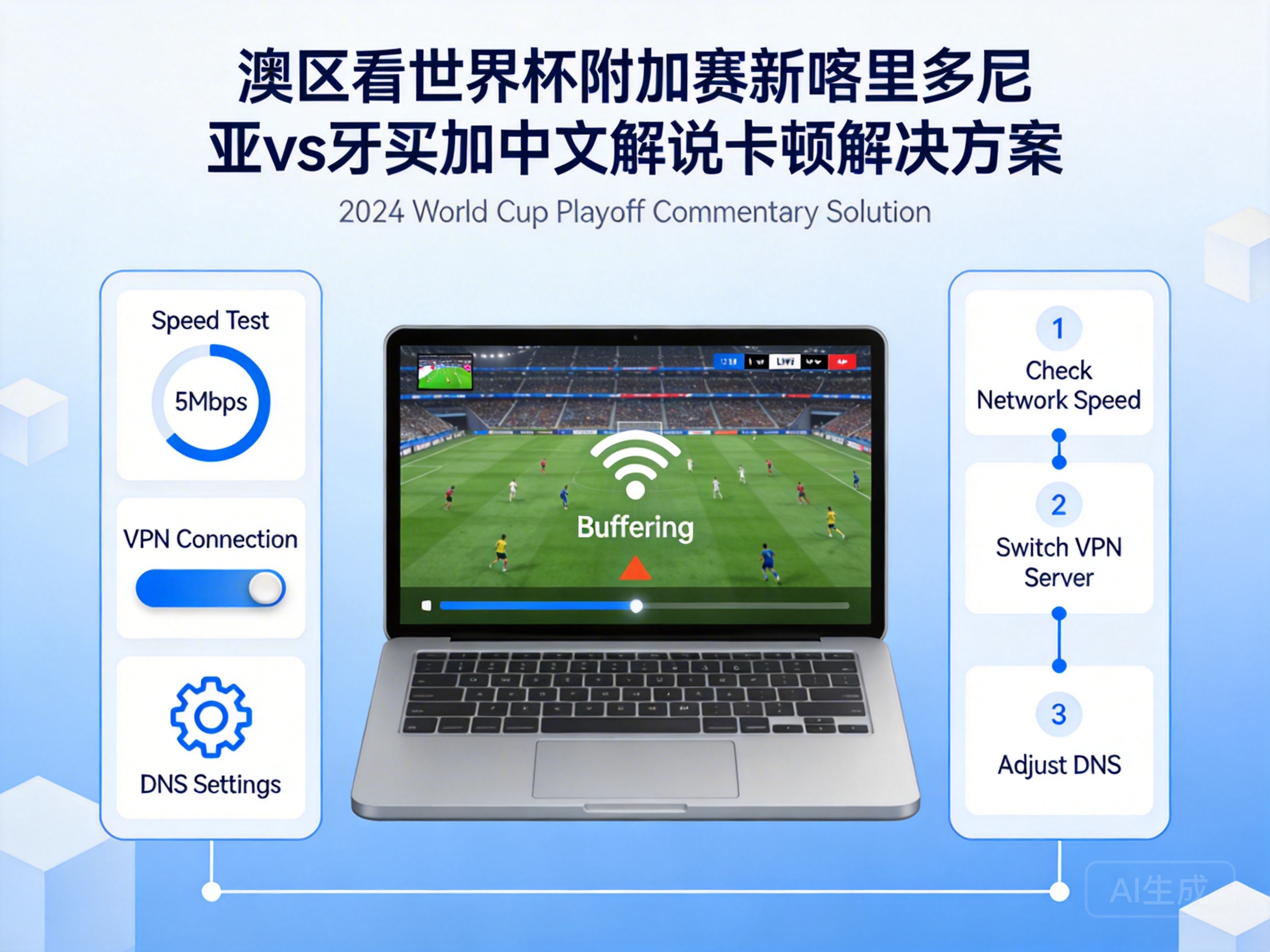
Tip: Use speed testing tools like Speedtest to check your current bandwidth. HD live streams for World Cup matches require at least 5Mbps of download bandwidth, while 4K streams need 15Mbps or more.
2. Adaptive Optimization for Chinese Commentary Live Sources
Most Chinese fans in Australia rely on domestic video platforms or third-party live sources for Chinese commentary, and cross-region signal transmission often leads to adaptation issues. First, switch to the official platform's low-latency live channel. Some platforms offer exclusive acceleration nodes for overseas users, which reduce the number of relays in cross-region data transmission.
Next, adjust live stream quality and separate commentary audio settings. If you're using 4K ultra-high definition, temporarily switch to 1080P HD or 720P standard definition to reduce single-frame data volume and adapt to limited cross-border bandwidth. Some platforms support separate audio track loading; try disabling video to load only Chinese commentary to rule out audio track transmission link failures.
Finally, switch to authorized third-party live sources. If official platforms continue to have lag issues, choose licensed sports live streaming platforms. These platforms usually optimize transmission nodes for overseas users and offer more stable Chinese commentary channels. Avoid unlicensed pirated sources to prevent copyright restrictions or security risks.
3. Use Network Acceleration Tools to Resolve Cross-Border Transmission Latency
Route detours and node congestion in cross-border transmission are the core causes of lag for Chinese commentary streams in Australia, and professional network acceleration tools can specifically address these issues. First, choose tools with exclusive acceleration channels for overseas Chinese users. These tools' nodes directly connect to domestic video platforms' overseas acceleration servers, significantly shortening data transmission paths.
Next, configure acceleration tool nodes correctly. Prioritize exclusive acceleration nodes partnered with your viewing platform instead of general cross-border nodes. Some tools support automatic speed testing and recommend optimal nodes; use this feature to select nodes with the lowest latency and 0% packet loss to maximize acceleration effects.
Finally, pay attention to the compliance and stability of acceleration tools. Choose tools with formal network service qualifications and avoid unregistered niche software to prevent risks like account theft or network monitoring. Test acceleration effects during non-event periods in advance to ensure stable operation during the live match.
4. Targeted Debugging of Device Systems and Software
System or software failures on viewing devices can also cause Chinese commentary lag. First, update your device system. Outdated system versions may have network adaptation vulnerabilities; updating to the latest official version fixes some network transmission bugs and improves the system's live stream decoding efficiency.
Next, clear cache data from live stream software. Long-term use leads to redundant cache data that occupies storage space and even disrupts decoding logic. Find the cache clearing option in the software's settings and clear it regularly to ensure smooth software operation.
Finally, try switching viewing devices or software. If lag occurs on large-screen devices like smart TVs, switch to mobile devices like phones or tablets, which usually have more flexible network adaptation logic. Also, switch to similar live stream software to rule out compatibility issues with a single application.
Conclusion
For Australian users facing Chinese commentary lag during the New Caledonia vs Jamaica playoff match, troubleshooting and optimization should cover four dimensions: local networks, live sources, cross-border acceleration, and device debugging. Prioritize resolving local hardware and connection issues, then adjust live sources and use acceleration tools for cross-border live streams, and finally eliminate software-level failures through device debugging. Following this from-simple-to-complex troubleshooting logic quickly restores stable viewing, ensuring you don't miss any exciting moments.