Introduction
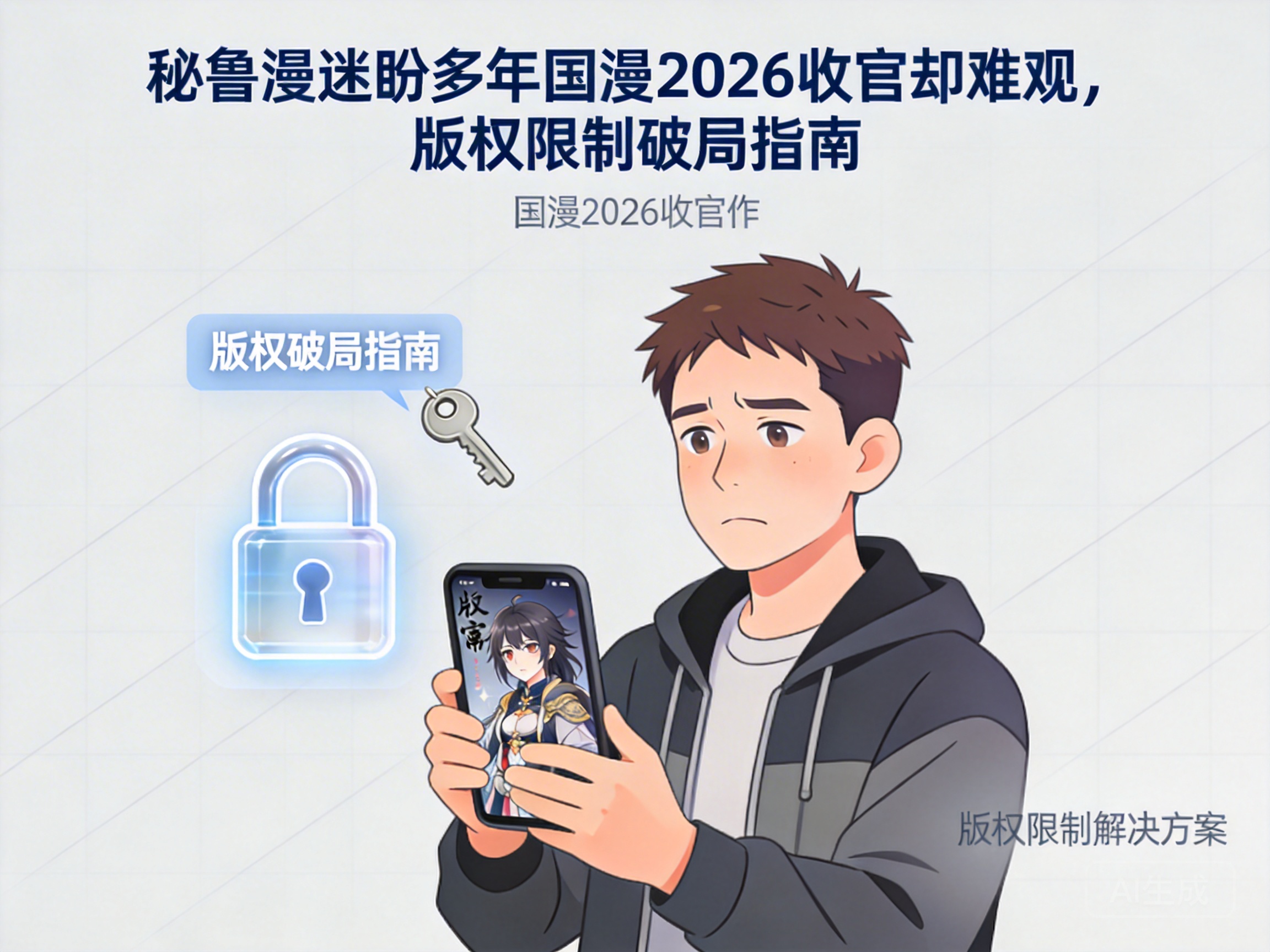
In Lima's manga-themed cafes, many young fans gather around tablets to discuss a Chinese anime set to conclude in 2026. Launched in 2018, this work has gained global popularity with its unique Eastern mythology setting. Peruvian fans even formed a Spanish translation team on their own, but they still can't access official streaming channels. As the finale approaches, copyright restrictions have become a high wall between them and the final plot.
Peru's Anime Fans' Dilemma: From Spontaneous Translation to No Legal Access
As early as 2019, the number of Chinese anime fans in Peru exceeded 30,000, with core members building a dedicated fan forum to share self-made Spanish subtitle resources. These unofficial translations can meet urgent needs, but they have problems such as translation errors and blurry images, and may be taken down at any time due to copyright complaints.
As the 2026 finale season approaches, fans' anxiety continues to rise. Many say they are willing to pay for official streaming services, but no local streaming platform in Peru has purchased the copyright, and regional restrictions on overseas platforms block them out. This embarrassment of "having money but nowhere to spend it" has become a common sentiment among Chinese anime fans in Peru.
A 2024 survey by the Peruvian Chinese Anime Fans Association shows that 87% of respondents are willing to pay $5-10 per month for genuine content, but only 12% can watch the target Chinese anime through legal channels.
Core of Copyright Restrictions: Regional Licensing and Distribution Logic
Chinese anime's overseas copyright licensing usually adopts a regional sub-licensing model, where copyright holders sell broadcasting rights for different countries and regions to local platforms separately to maximize commercial benefits. Under this model, users in unlicensed regions naturally cannot access content through official channels.
For niche markets like Peru, copyright holders tend to prioritize larger markets with stronger purchasing power, such as Europe and the United States, before gradually covering other regions. In addition, differences in content review standards and copyright laws across countries increase the complexity of the licensing process, leaving some regions in a long-term copyright vacuum.
Some Chinese anime copyright holders say it's not that they don't want to license to Peru, but that the local market lacks mature cooperation platforms, and users' payment habits are not fully developed. The revenue after licensing may not cover operational costs. This commercial consideration further exacerbates the viewing dilemma for Peruvian fans.
Solution 1: Compliance and Practical Methods of Cross-Region Viewing
For ordinary users, the most direct solution is to use cross-region tools to break through the platform's regional restrictions. Common cross-region tools include Virtual Private Networks (VPNs) and Smart DNS, which can modify the user's network IP address, making the platform think the user is in an authorized region.
It should be noted that cross-region viewing may violate the platform's user agreement, risking account suspension. In addition, some countries have strict regulations on VPN use. Although Peru does not completely ban VPNs, cross-region behavior for commercial purposes may violate copyright laws.
If choosing cross-region viewing, it is recommended to prioritize VPN service providers with formal qualifications to avoid information leakage risks from free tools. At the same time, it should only be used for personal non-commercial purposes to reduce unnecessary legal risks.
Solution 2: Market Sinking Strategies for Copyright Holders and Platforms
From the perspective of copyright holders, they can try to launch global licensing packages and cooperate with international streaming platforms to cover more niche markets with Chinese anime content simultaneously. Although this model reduces the licensing revenue in a single region, it can achieve overall profitability through the expansion of user base.
For local platforms in Peru, they can form a procurement alliance with streaming platforms in neighboring countries to reduce copyright costs through bulk procurement and improve their bargaining power with Chinese anime copyright holders. In addition, platforms can launch exclusive subscription packages for Chinese anime to cultivate users' payment habits.
Some overseas Chinese anime have already tried this sinking strategy. For example, a top Chinese anime reached a global licensing cooperation with Netflix, allowing users in more than 190 countries and regions including Peru to watch the content simultaneously. This model provides a reference for solving the copyright vacuum problem in niche markets.
Solution 3: Collaborative Cooperation Between Official Translation and Fan Communities
Copyright holders can cooperate with local fan translation teams to transform unofficial spontaneous translations into officially authorized content. This approach can leverage the language advantages and localization experience of fan teams while reducing the cost of official translation.
For example, a Chinese anime copyright holder once cooperated with a fan translation team in Southeast Asia. After reviewing and optimizing the subtitles made by fans, they were launched as official subtitles on local platforms. This not only meets the localization needs of users but also curbs the spread of pirated content.
For Chinese anime fans in Peru, they can actively communicate with copyright holders to demonstrate the local user scale and payment willingness, and strive for official translation authorization. This two-way communication and collaboration can provide more accurate market data for copyright holders and promote the implementation of the licensing process.
Conclusion
The long-awaited finale season of the Chinese anime for Peruvian fans is approaching, but they face the dilemma of being unable to watch it due to copyright restrictions. This dilemma is essentially a conflict between the commercial logic of Chinese anime going overseas and the needs of niche markets. Whether it's compliant cross-region viewing at the user level, market sinking strategies by copyright holders, or collaboration between fans and officials, feasible solutions are provided. With the continuous advancement of Chinese anime going overseas, the copyright vacuum problem in niche markets is expected to be gradually resolved.