Introduction
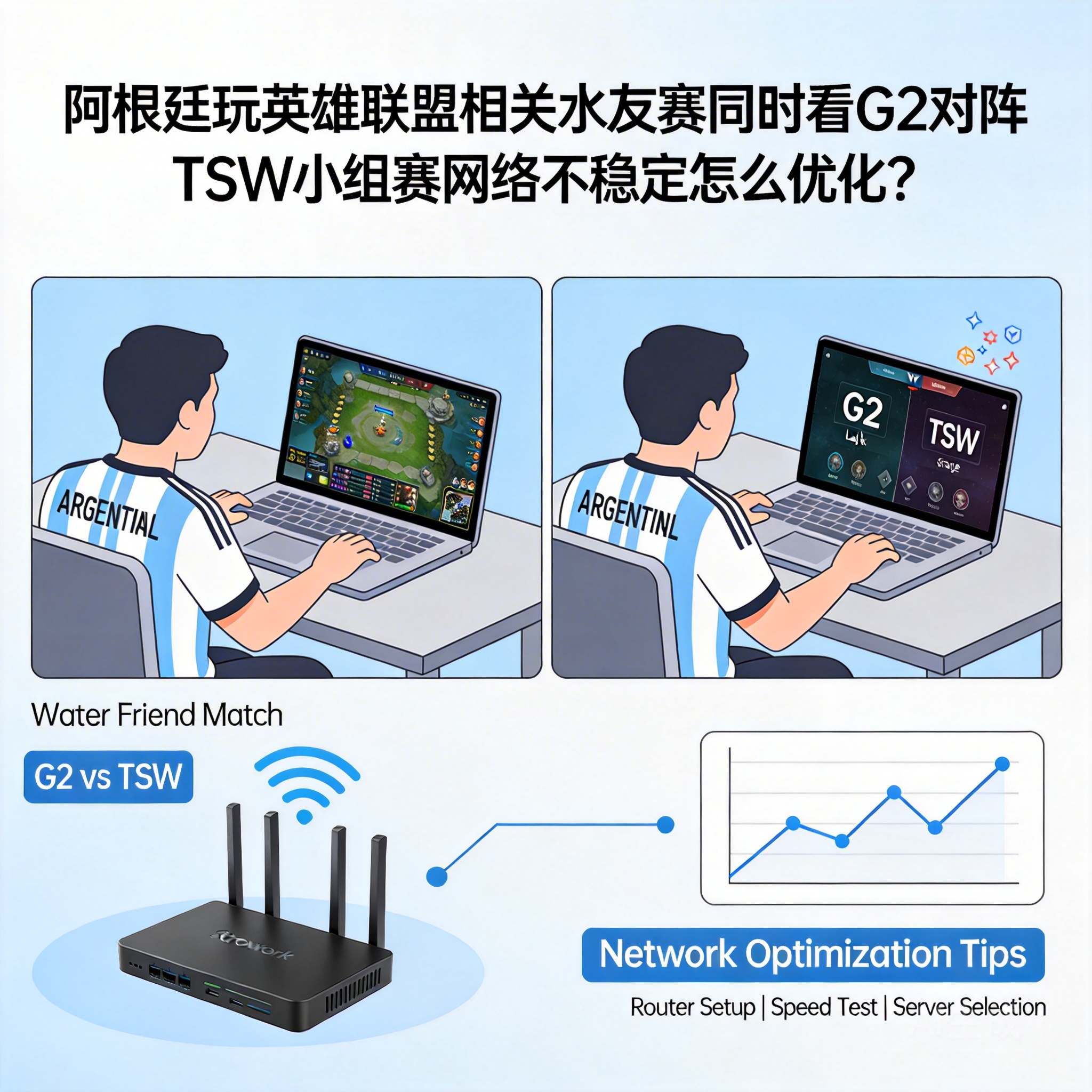
For League of Legends players in Argentina, participating in local fan games while watching the MSI group stage match between G2 and TSW is a popular recent demand, but network instability often ruins the experience. Issues such as local server load and cross-ocean network link congestion frequently lead to game packet loss and live stream buffering, becoming a common frustration for players. Below are targeted optimization solutions from multiple perspectives.
Prioritize Game Network: Traffic Shaping and Bandwidth Control
Running both the game and live stream simultaneously will compete for limited bandwidth resources, causing instability in both. Players can use the router traffic shaping function to set League of Legends client traffic as the highest priority, allowing live stream platform traffic to automatically adapt to remaining bandwidth and preventing game data packets from being delayed.
If the router does not support this function, use computer-side bandwidth management software to manually limit the download speed of the live stream platform. For example, reducing the live stream resolution to 720P and disabling bullet comments can reduce bandwidth consumption by about 40%, reserving at least 20Mbps of stable upload and download bandwidth for the game.
League of Legends prioritizes network stability over bandwidth; a stable 10Mbps bandwidth is sufficient for the game, while live streams require bandwidth allocation adjusted based on resolution.
Optimize Cross-Ocean and Local Network Links: Node Selection and Operator Switching
The group stage signal of G2 vs TSW is mostly transmitted from European servers, and players in Argentina need to receive signals across the ocean, which is prone to link congestion. Local fan games usually connect to South American servers, which may also be affected by local network peak hours. Players can optimize through the following methods:
- Switch to a local esports-specific operator in Argentina, which usually has direct links to South American League of Legends servers, reducing game packet loss rate
- Use an esports accelerator that supports European nodes, select the Western European node with the lowest latency to access the live stream platform, avoiding congested nodes on cross-ocean links
In addition, it is recommended to participate in fan games or watch live streams during off-peak hours, such as avoiding the local home network peak from 18:00 to 22:00, which can effectively reduce the probability of network congestion.
Device and System Optimization: Reduce Background Interference
Programs running in the computer background, system updates, etc., will quietly occupy network resources, causing network instability in games and live streams. Players can clean up the background through the following steps:
- Open Task Manager and close unnecessary background programs such as automatic updates and cloud synchronization, like OneDrive and Steam automatic downloads
- Disable Windows automatic update function to avoid update data packets occupying network bandwidth
- Switch to a wired network connection; WiFi signals are easily interfered by walls and electrical appliances, and wired connections are usually over 30% more stable than WiFi
At the same time, it is recommended to regularly clear the computer's DNS cache, reset domain name resolution by entering "ipconfig /flushdns" in Command Prompt, avoiding network jump delays caused by incorrect DNS cache.
Conclusion
For network instability issues faced by Argentine players when participating in League of Legends fan games while watching G2 vs TSW group stage matches, solutions can be approached from three dimensions: bandwidth control, link optimization, and device cleanup. Through priority setting, node selection, and background cleanup, the probability of network packet loss and buffering can be effectively reduced, ensuring a smooth experience for both the game and live stream.